Trafy
Research

We’re launching the Google DeepMind Accelerator program in Asia Pacific to tackle environmental risks.

The Asia-Pacific region is a global engine for economic growth, but it's also highly vulnerable to climate change. While green technologies are gaining momentum, a recen…

Google DeepMind·May 17, 2026·1 min read·Original source ↗
We’re launching the Google DeepMind Accelerator program in Asia Pacific to tackle environmental risks.

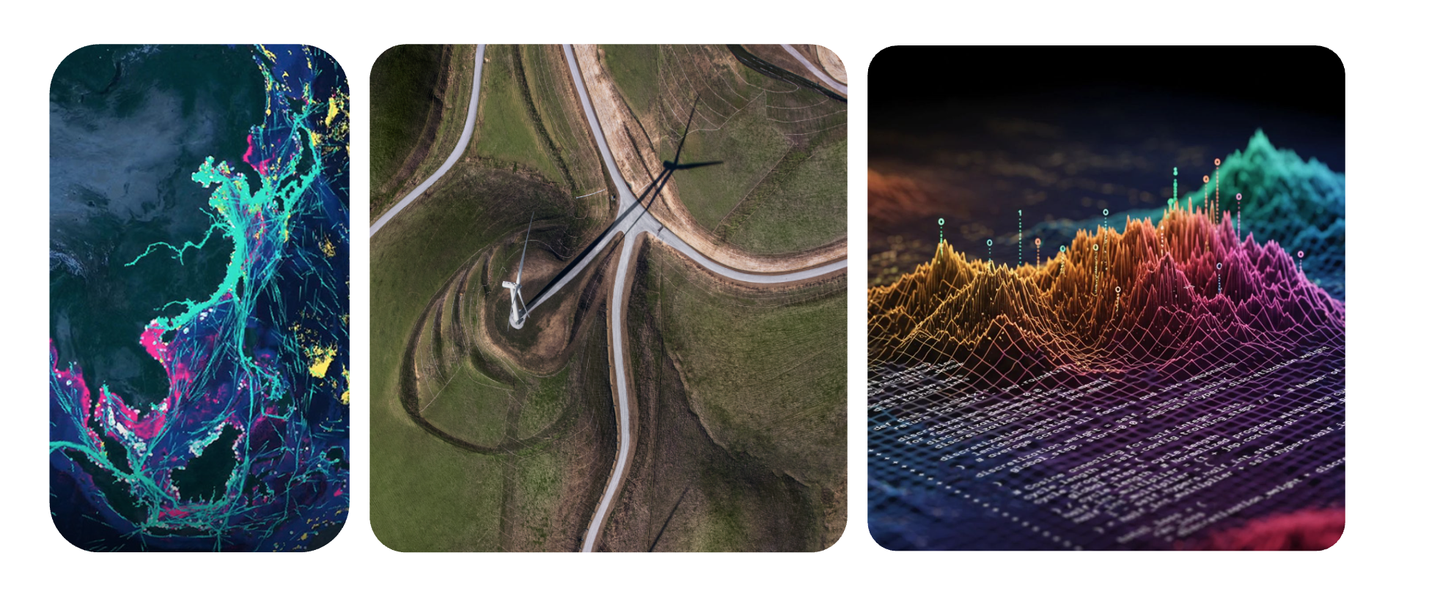
The Asia-Pacific region is a global engine for economic growth, but it's also highly vulnerable to climate change. While green technologies are gaining momentum, a recent report shows they aren’t scaling fast enough to keep up with the region’s rising environmental risks.To help innovators tackle these environmental challenges, we’re launching an inaugural Google DeepMind Accelerator program in APAC focused on “AI for the Planet.”This three-month program is designed for startups, research teams and nonprofits across the region to use frontier AI to solve problems in nature, climate, agriculture, energy and more. Selected organizations will receive expert mentorship, tailored support and help integrating frontier AI and science AI models from Google AI experts into their projects or products.If you're working on climate solutions, we want to help you scale your work. The program kicks off with an in-person bootcamp in Singapore, and you can learn more and register your interest today.

POSTED IN:

Related stories

Related

Learning When to Trust via Selective Context Preference OptimizationResearch

Learning When to Trust via Selective Context Preference Optimization

Language models increasingly condition their answers on external signals, and a single misleading one can turn a correct answer wrong. The obvious remedy, training models to resist such signals, hides a failure mode: a model that ignores all context looks robust yet is useless when the context is worth trusting. We recast the problem as selective trust and introduce MIST, a human-annotated benchmark that renders each reasoning item under four matched conditions (clean, misleading, correct-context, and irrelevant-context), together with SC2W, a paired metric counting how often a misle

arXiv (cs.AI) · Aug 6, 2026
4 min
Learning When to Trust via Selective Context Preference OptimizationResearch

Learning When to Trust via Selective Context Preference Optimization

Language models increasingly condition their answers on external signals, and a single misleading one can turn a correct answer wrong. The obvious remedy, tr...

Papers with Code · Aug 6, 2026
1 min
Tracing the Heart: An Evidence-Linked Pipeline for Heart-Failure Feature EngineeringResearch

Tracing the Heart: An Evidence-Linked Pipeline for Heart-Failure Feature Engineering

Electronic health record (EHR) feature engineering is a major bottleneck in clinical research and AI, accounting for 39-45% of data scientists' workload. This is especially pronounced in heart failure, which affects an estimated 6.7 million U.S. adults and requires integrating fragmented EHR data with disease-specific, guideline-based clinical reasoning. Existing rule-based and large language model (LLM)-based approaches offer only partial automation with limited maintainability and evidence traceability. We developed the Nimblemind Multi-Agent System (nMAS), an evidence-linked, rubr

arXiv (cs.AI) · Aug 6, 2026
4 min